AMO Design System v1.1

3-minute read

About the Project

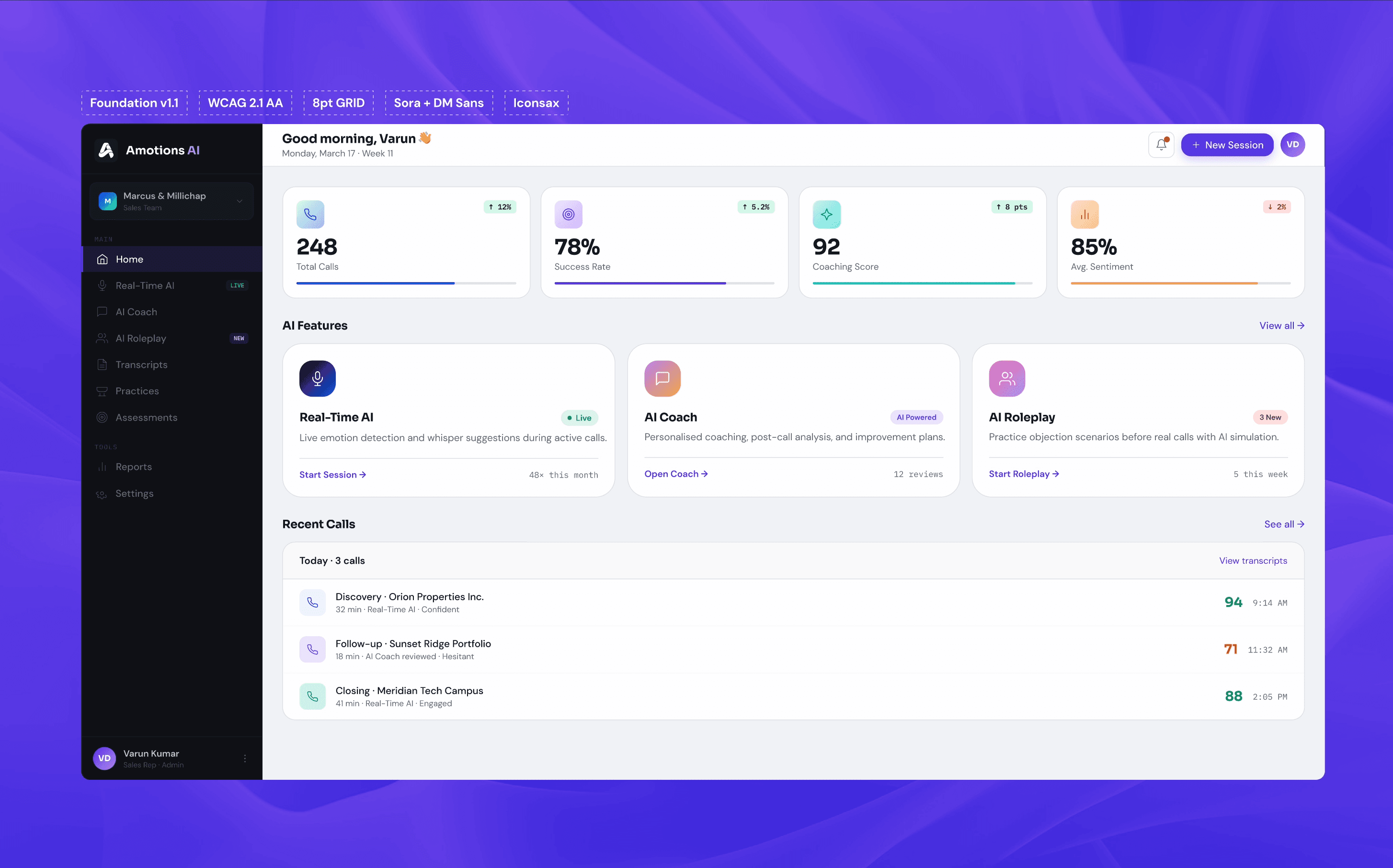
Designed an end-to-end SaaS Design System

CATEGORY

Industry Project

Amotions Inc.

MY ROLE

Product Designer

Reporting to CEO

TYPE

Design System

Web & Mobile

TIMELINE

6 weeks

2025

PROBLEM

The product was built on Chakra UI, a generic component library with no brand expression and no support for AI-native UI patterns. The same brand color appeared as four different hex values across the codebase. Three core interactive elements failed WCAG AA contrast. Developers were rebuilding components from scratch every sprint because there was no shared source of truth.

WHAT WORKED

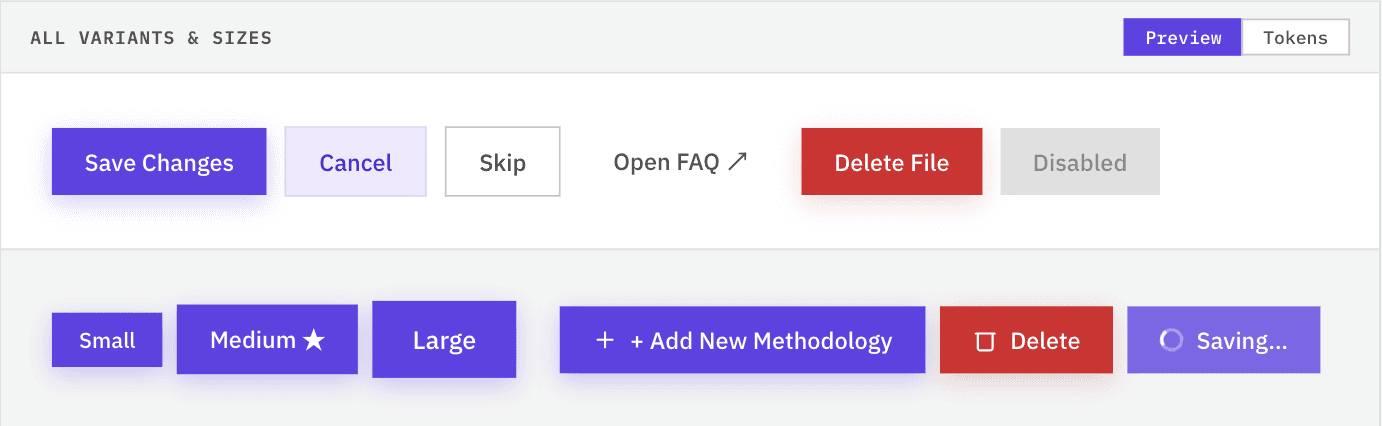
Replacing Chakra entirely with a token-first architecture. Every color, spacing value, shadow, and motion decision was defined as a named token before it became code. This gave designers and developers a shared language for the first time, i.e., one file, one reference, no guesswork.

RESULT

  • 50% Reduction in Miscommunication: Fewer clarification cycles between design and engineering.

  • Full WCAG AA Compliance: Every color token verified before it reached the product.

  • 3-5 Day Rollout: Engineering confirmed full implementation across all product pages.

TOOLS

Figma, Style Dictionary, W3C DTCG

Design

Figma Tokens Studio, HTML/CSS

Documentation & Handoff

THE SITUATION

A product growing faster than its UI could keep up.

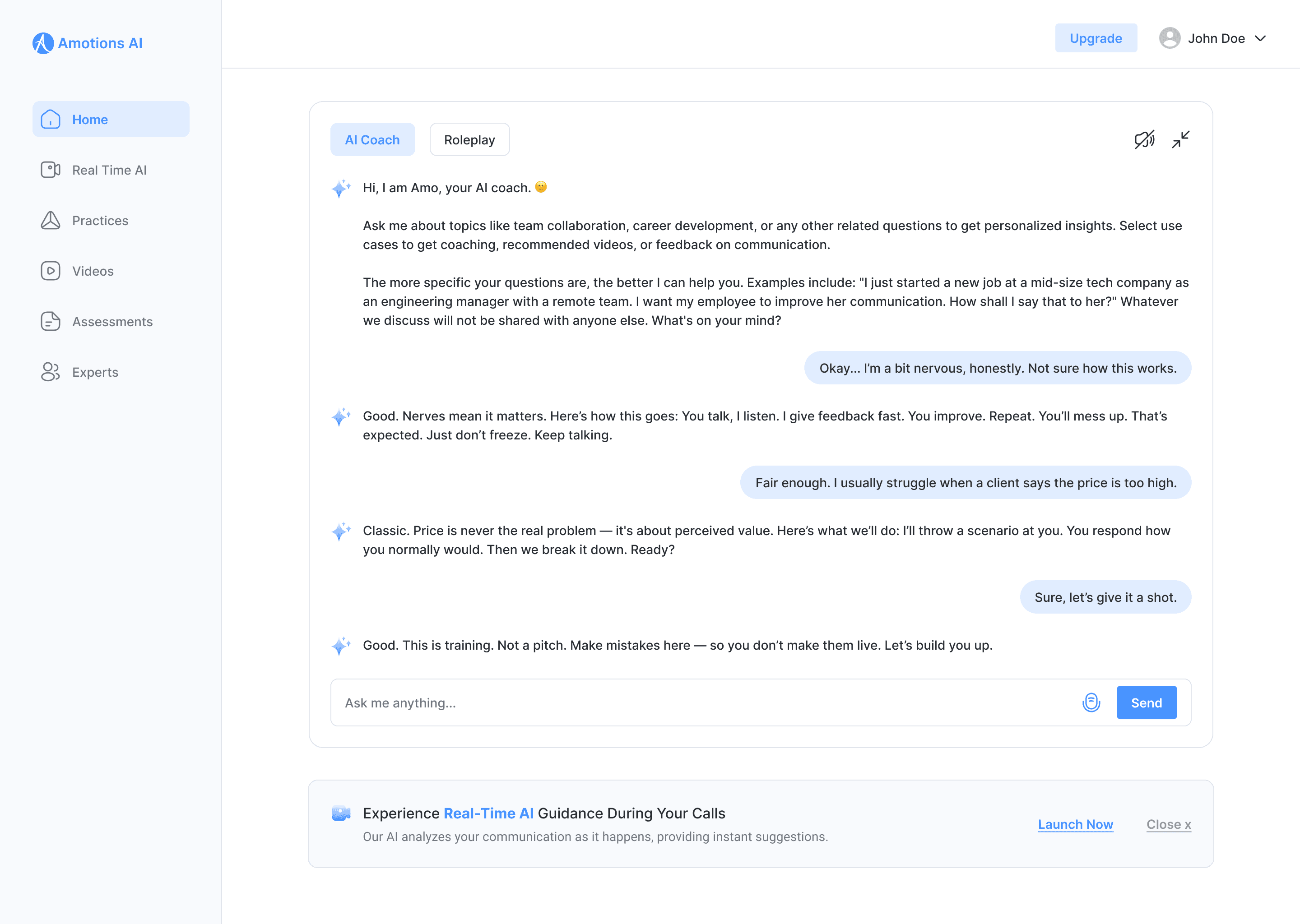
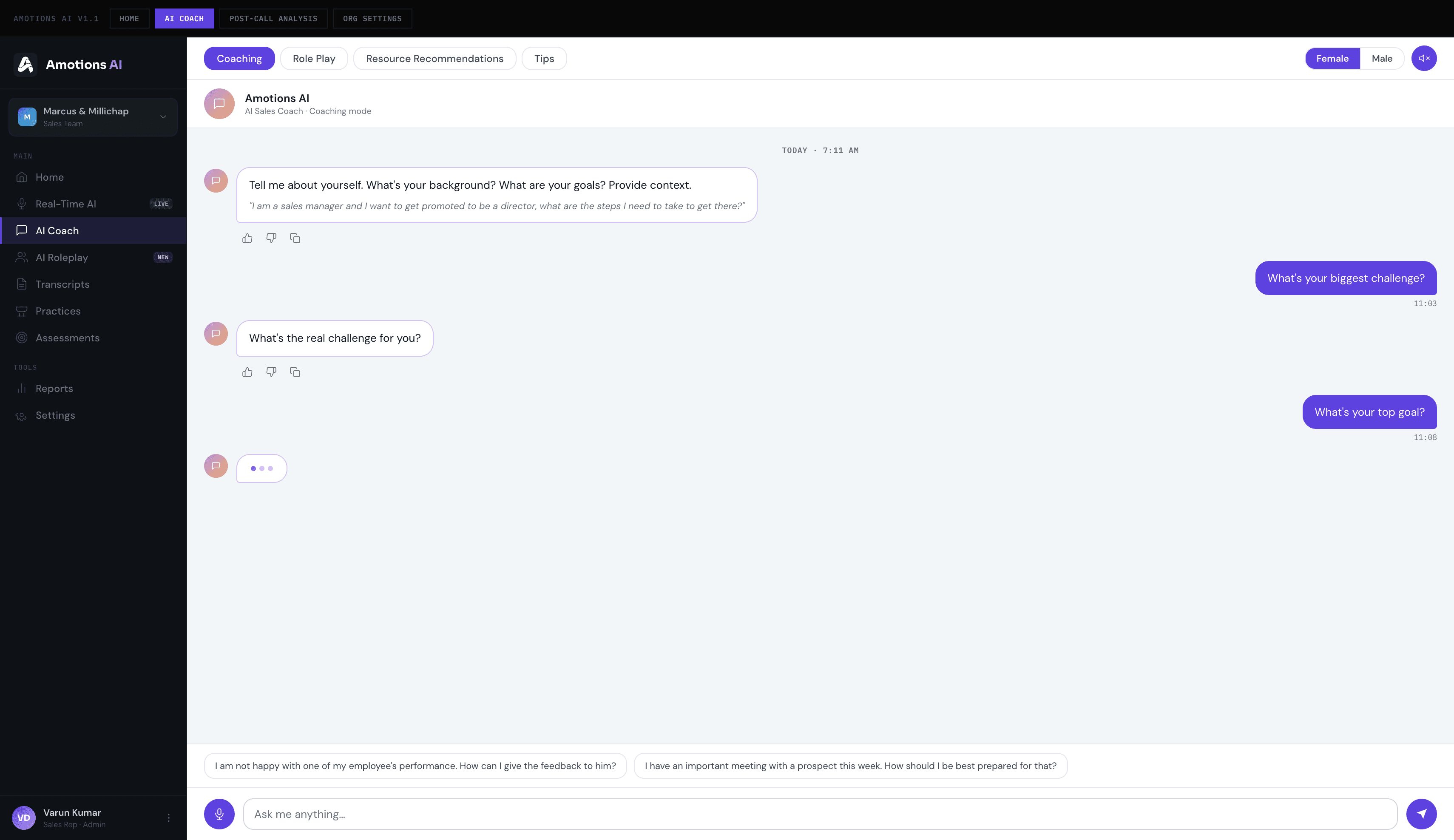
Amotions AI is a real-time sales coaching platform. Live emotion detection during calls, AI-generated suggestions, Post-call analysis, The product was growing. The UI wasn't keeping up. The stack was Chakra UI. It worked for a generic product. Amotions isn't generic.
THE AUDIT

Team knew something was broken. The file confirmed it.
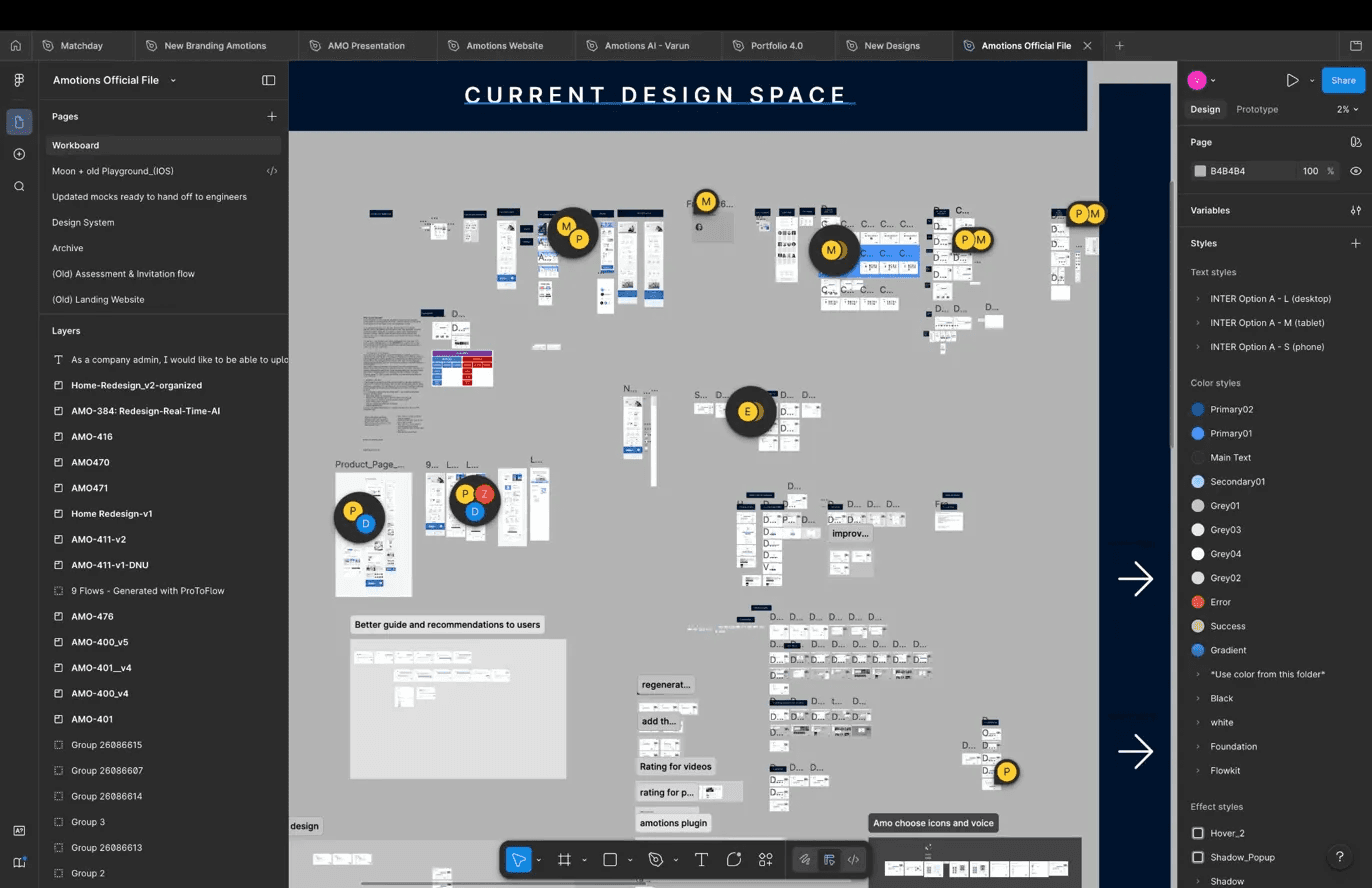
Three interactive elements failing WCAG AA.

Components rebuilt from scratch every sprint because no shared library existed to pull from.

Four different purples across the codebase, none of them the brand color.

Seven pages. Frames versioned by suffix: v1, v2, v4, v5, DNU.

Color styles named Primary01, Primary02, Grey01 through Grey04, numbered, not named for function. No indication of what Secondary01 means, what it's for, or where it belongs.

Developers were handed frames from a workboard where the most recent design lived somewhere between AMO-400_v5 and AMO-411-v1-DNU.

THE CASE

Why Chakra couldn't be fixed. Only replaced.

No Brand Expression

Chakra's theming fights you at scale. The Amotions palette has 8 hues with distinct functional roles, each AI feature needing its own visual identity. That kind of expression can't be bolted onto a generic system.

The Wrong Components

Real-time coaching has patterns that don't exist in any standard library: Live emotion signals, Phase progress during active calls, Transcript bubbles with feedback actions, Session status headers. These components had to to be custom designed every time and it was becoming messy.


TOKENS

Tokens first. Everything else follows.

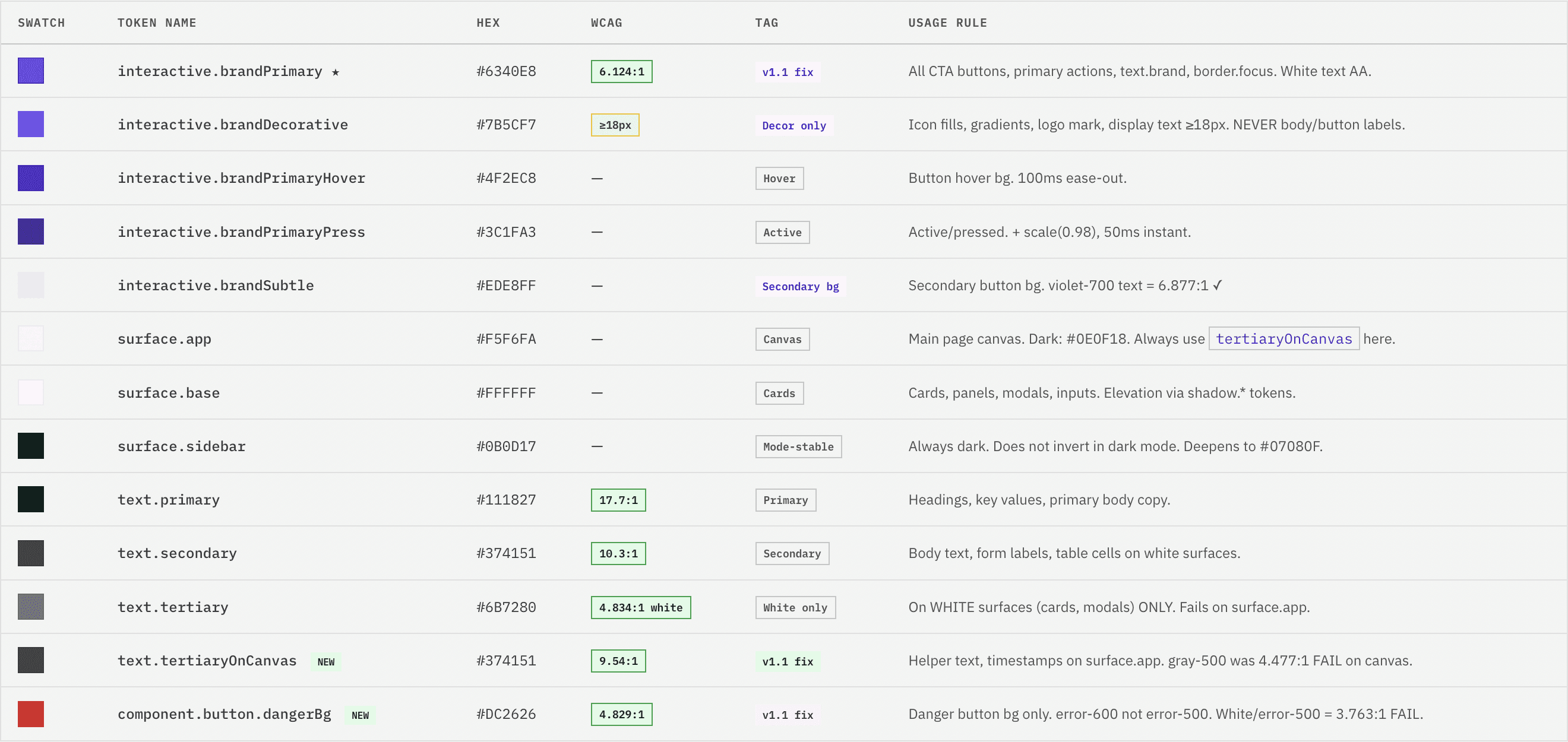
Before touching a single component, I built the token architecture. Every color, spacing value, shadow, and motion decision is a named token before it becomes CSS.
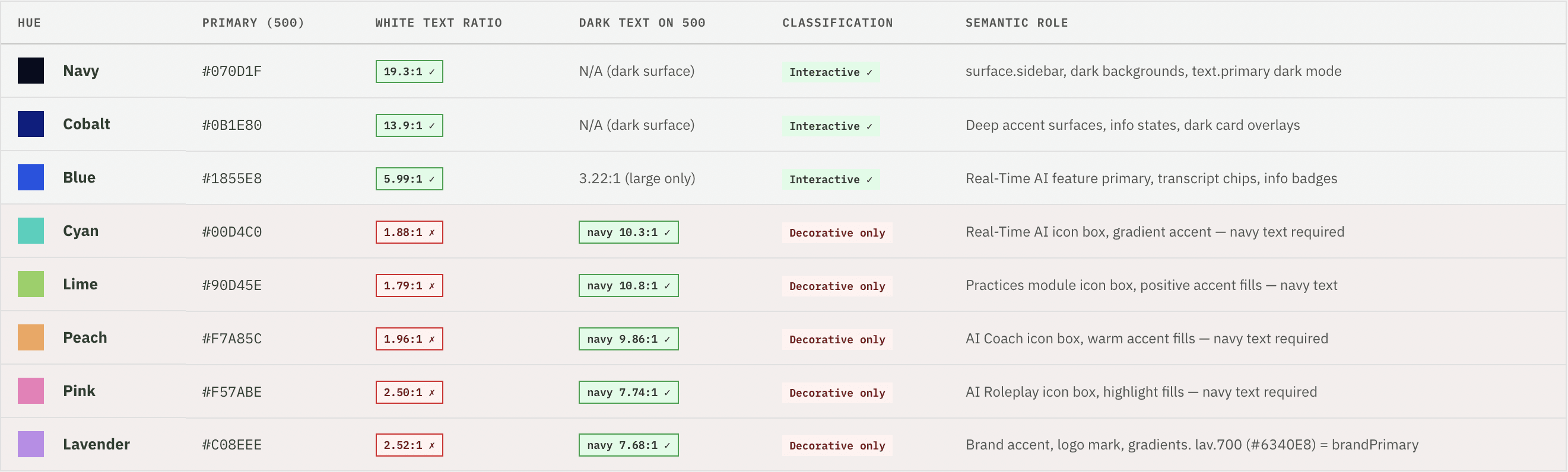
The 8-hue palette gives each feature a distinct identity. Real-Time AI in Navy to Blue, AI Coach in Lavender to Peach, AI Roleplay in Pink to Lavender, Practices in Lime to Cyan.

Three principles held throughout: semantic tokens always, never primitives. Developers reference --interactive-brand-primary, never lavender-700. Six of eight hues are decorative only, never on interactive text or buttons. The brand primary was corrected from #7B5CF7 (4.453:1, a WCAG fail) to #6340E8 (6.124:1 ✓).
FOUNDATIONS

Basics aren't basic when you define them precisely.

Typography

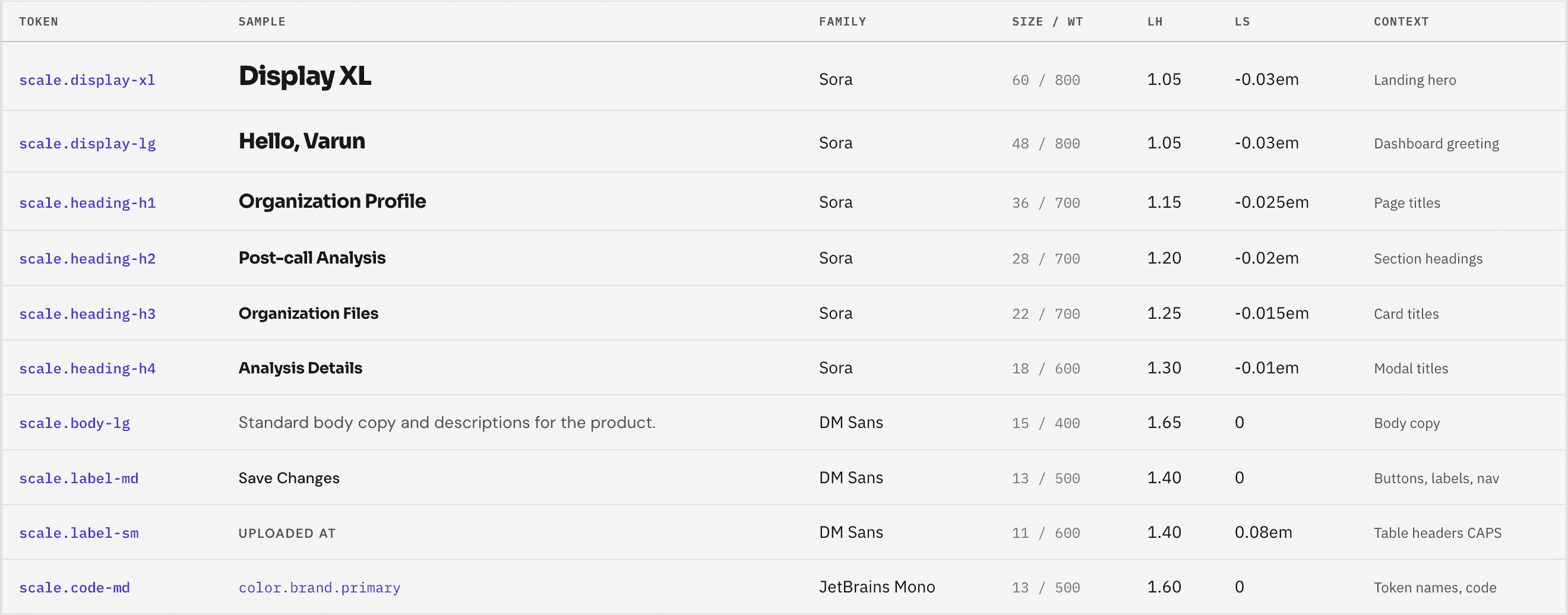
Three fonts, hard roles, no exceptions. Sora for headings only. DM Sans for all UI text, buttons, labels, and nav. JetBrains Mono for tokens, data, and table headers only.
Spacing

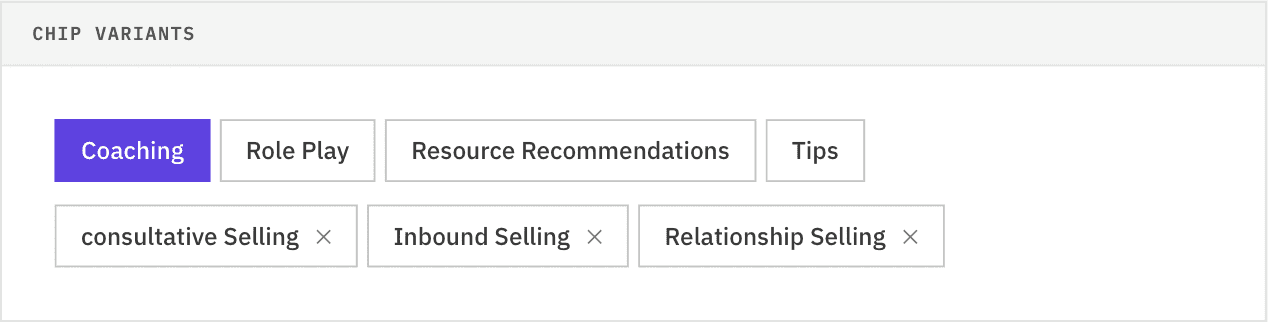
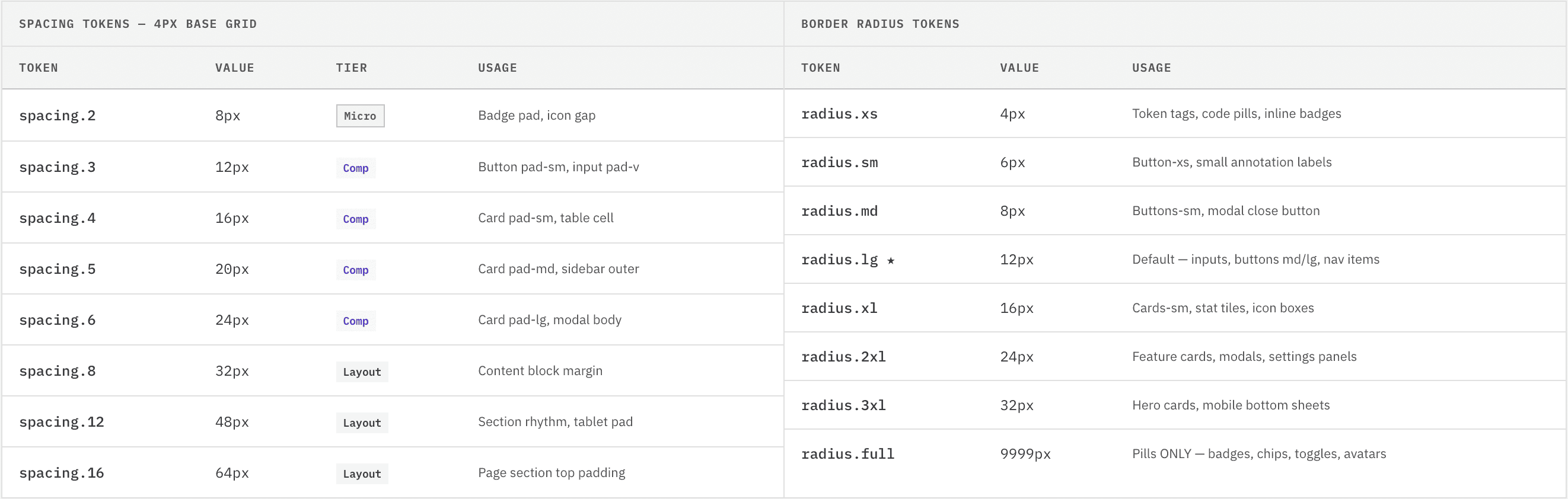
Three tiers, nothing in between. 8pt for layout and page structure. 4pt for component padding and gaps. 2pt for micro, badge and chip inner padding only.
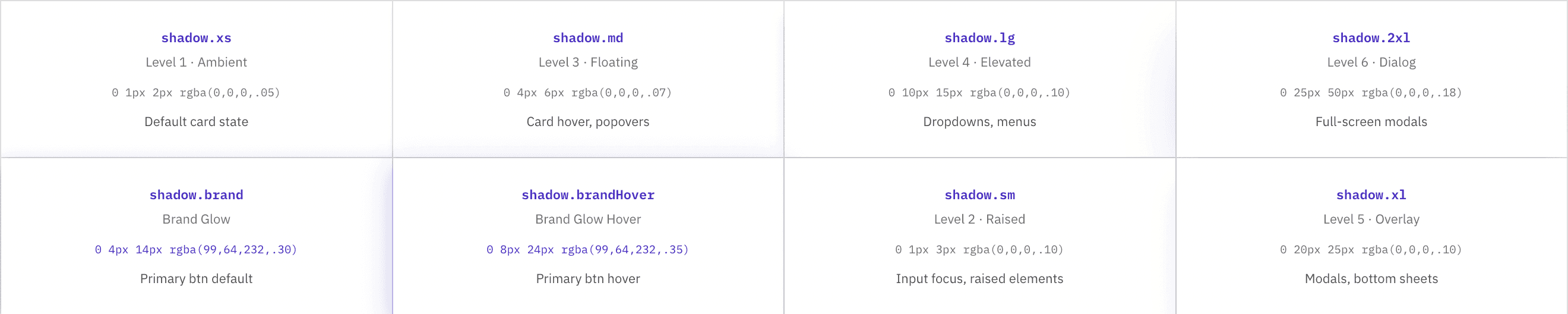
Elevation

Shadows in light mode. Progressively lighter surfaces in dark mode. Contrast stays consistent across both.
HANDOFF

Everything engineering needs in a single file.

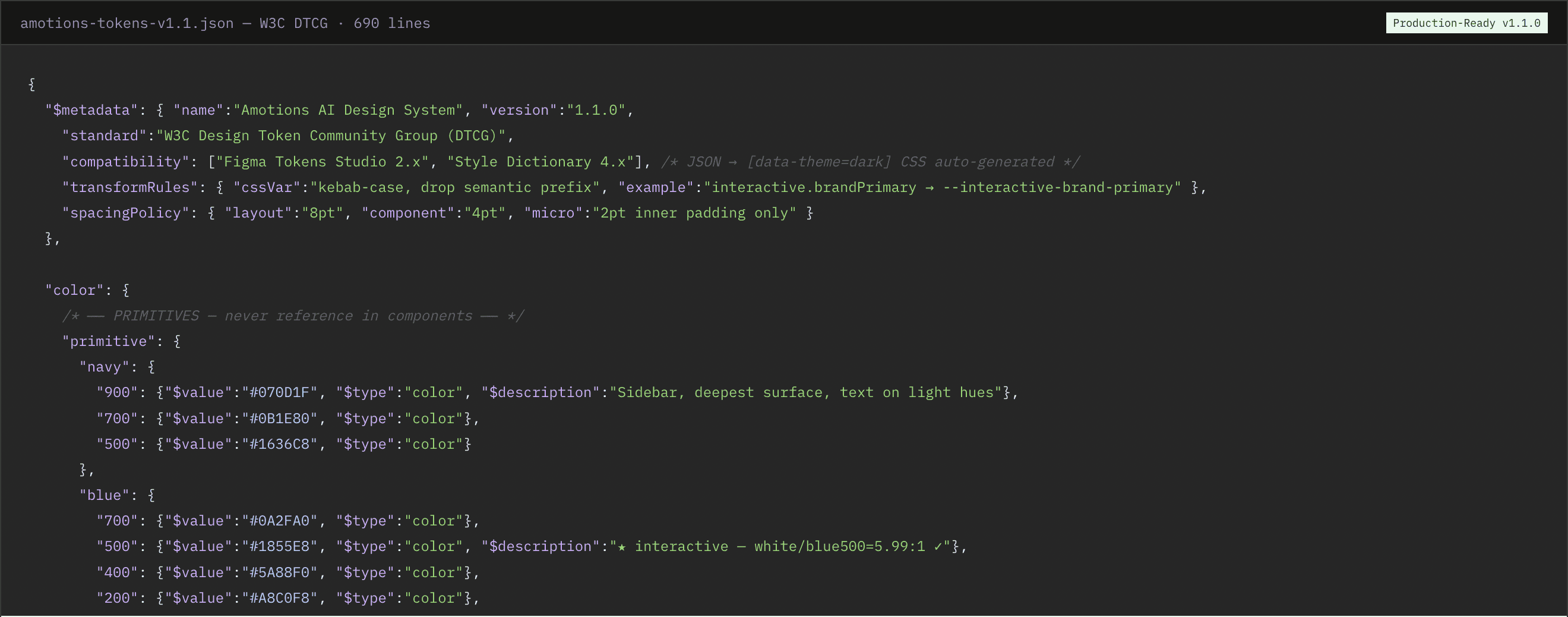
amotions-tokens-v1.1.json in W3C DTCG format. Drop into Figma Tokens Studio or run through Style Dictionary. One command generates CSS, JS, iOS, and Android outputs.

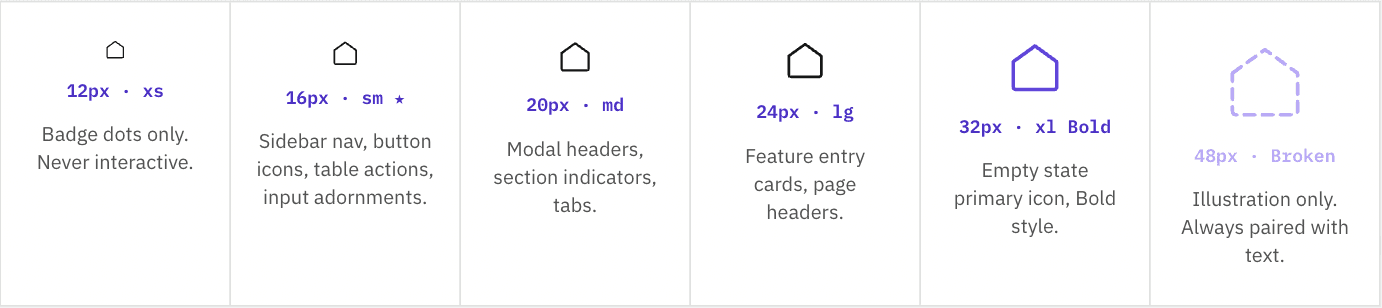
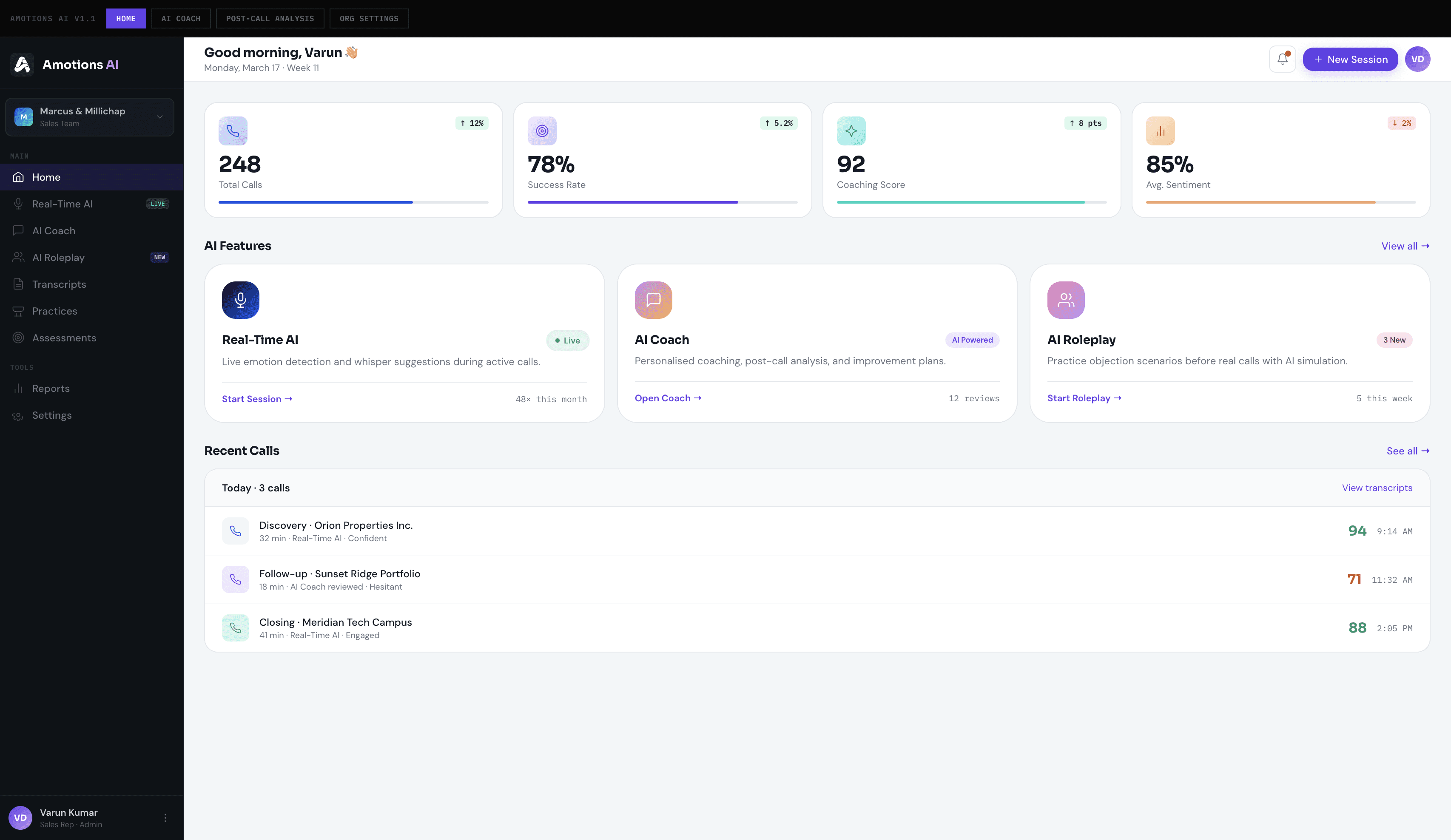
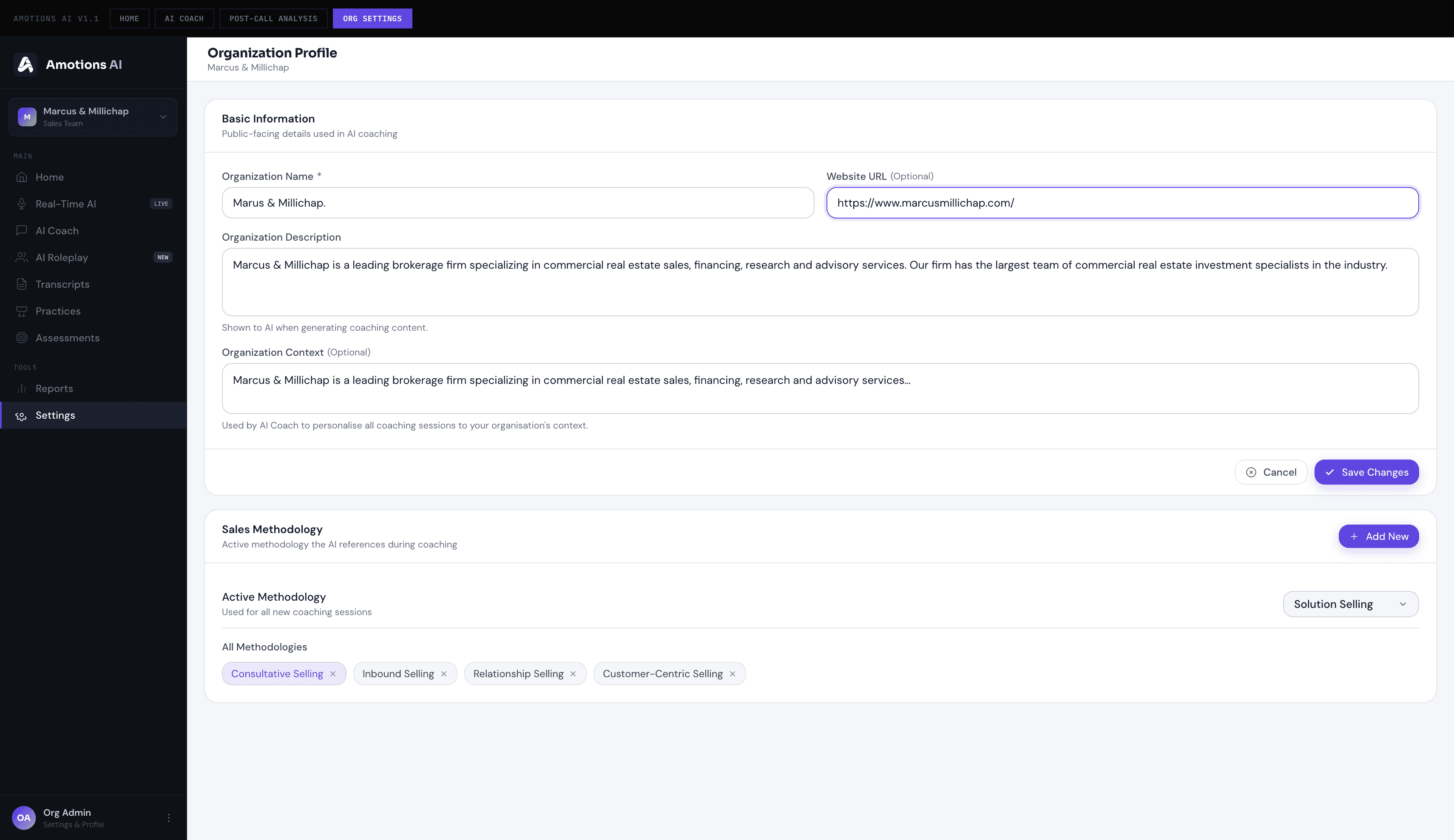
Documentation delivered as a single HTML file. Opens in any browser. No install required. 18 sections. Complete token tables. WCAG audit results. Three live screen examples. Engineering confirmed the token file was enough to start implementation in 3 to 5 days across all product pages.

RESULTS

One token file. Zero failures. Measurable impact.

50% reduction in designer-developer miscommunication.

Zero WCAG AA failures across 54 audits.

A confirmed 3 to 5 day full product rollout.

One token file replacing four conflicting hex values.
TOKENS

Tokens first. Everything else follows.

Before touching a single component, I built the token architecture. Every color, spacing value, shadow, and motion decision is a named token before it becomes CSS.

The 8-hue palette gives each feature a distinct identity. Real-Time AI in Navy to Blue, AI Coach in Lavender to Peach, AI Roleplay in Pink to Lavender, Practices in Lime to Cyan.

Three principles held throughout: semantic tokens always, never primitives. Developers reference --interactive-brand-primary, never lavender-700. Six of eight hues are decorative only, never on interactive text or buttons. The brand primary was corrected from #7B5CF7 (4.453:1, a WCAG fail) to #6340E8 (6.124:1 ✓).

FOUNDATIONS

Basics aren't basic when you define them precisely.

Typography

Three fonts, hard roles, no exceptions. Sora for headings only. DM Sans for all UI text, buttons, labels, and nav. JetBrains Mono for tokens, data, and table headers only.

Spacing

Three tiers, nothing in between. 8pt for layout and page structure. 4pt for component padding and gaps. 2pt for micro, badge and chip inner padding only.

Elevation

Shadows in light mode. Progressively lighter surfaces in dark mode. Contrast stays consistent across both.

HANDOFF

Everything engineering needs in a single file.

amotions-tokens-v1.1.json in W3C DTCG format. Drop into Figma Tokens Studio or run through Style Dictionary. One command generates CSS, JS, iOS, and Android outputs.

Documentation delivered as a single HTML file. Opens in any browser. No install required. 18 sections. Complete token tables. WCAG audit results. Three live screen examples. Engineering confirmed the token file was enough to start implementation in 3 to 5 days across all product pages.

RESULTS

One token file. Zero failures. Measurable impact.

50% reduction in designer-developer miscommunication.

Zero WCAG AA failures across 54 audits.

A confirmed 3 to 5 day full product rollout.

One token file replacing four conflicting hex values.
WHAT'S NEXT

The foundation is built. The product grows on top of it.

Next: a linting rule that flags any hardcoded hex value in the codebase, making regressions structurally impossible.

A Storybook component library wired directly to the token file so design and engineering reference the same source of truth simultaneously.

This is just one story. See what else I’ve designed

There’s a lot more where that came from. Browse through my other projects to see how I tackle problems, experiment with ideas, and create meaningful experiences.

FOUNDATIONS

Basics aren't basic when you define them precisely.

Typography

Three fonts, hard roles, no exceptions. Sora for headings only. DM Sans for all UI text, buttons, labels, and nav. JetBrains Mono for tokens, data, and table headers only.

Spacing

Three tiers, nothing in between. 8pt for layout and page structure. 4pt for component padding and gaps. 2pt for micro, badge and chip inner padding only.

Elevation

Shadows in light mode. Progressively lighter surfaces in dark mode. Contrast stays consistent across both.

HANDOFF

Everything engineering needs in a single file.

amotions-tokens-v1.1.json in W3C DTCG format. Drop into Figma Tokens Studio or run through Style Dictionary. One command generates CSS, JS, iOS, and Android outputs.

Documentation delivered as a single HTML file. Opens in any browser. No install required. 18 sections. Complete token tables. WCAG audit results. Three live screen examples. Engineering confirmed the token file was enough to start implementation in 3 to 5 days across all product pages.

RESULTS

One token file. Zero failures. Measurable impact.

50% reduction in designer-developer miscommunication.

Zero WCAG AA failures across 54 audits.

A confirmed 3 to 5 day full product rollout.

One token file replacing four conflicting hex values.
AMO Design System v1.1

3-minute read

About the Project

Redesigned AI-powered sales-call analysis for sales teams.

CATEGORY

Industry Project

Amotions Inc.

MY ROLE

Product Designer

Reporting to CEO

TYPE

Design System

Web & Mobile

TIMELINE

6 weeks

2025

PROBLEM

The product was built on Chakra UI, a generic component library with no brand expression and no support for AI-native UI patterns. The same brand color appeared as four different hex values across the codebase. Three core interactive elements failed WCAG AA contrast. Developers were rebuilding components from scratch every sprint because there was no shared source of truth.

WHAT WORKED

Replacing Chakra entirely with a token-first architecture. Every color, spacing value, shadow, and motion decision was defined as a named token before it became code. This gave designers and developers a shared language for the first time, i.e., one file, one reference, no guesswork.

RESULT

  • 50% Reduction in Miscommunication: Fewer clarification cycles between design and engineering.

  • Full WCAG AA Compliance: Every color token verified before it reached the product.

  • 3-5 Day Rollout: Engineering confirmed full implementation across all product pages.

TOOLS

Figma, Style Dictionary, W3C DTCG

Design

Figma Tokens Studio, HTML/CSS

Documentation & Handoff

AMO Design System v1.1

3-minute read

About the Project

Redesigned AI-powered sales-call analysis for sales teams.

CATEGORY

Industry Project

Amotions Inc.

MY ROLE

Product Designer

Reporting to CEO

TYPE

Design System

Web & Mobile

TIMELINE

6 weeks

2025

PROBLEM

The product was built on Chakra UI, a generic component library with no brand expression and no support for AI-native UI patterns. The same brand color appeared as four different hex values across the codebase. Three core interactive elements failed WCAG AA contrast. Developers were rebuilding components from scratch every sprint because there was no shared source of truth.

WHAT WORKED

Replacing Chakra entirely with a token-first architecture. Every color, spacing value, shadow, and motion decision was defined as a named token before it became code. This gave designers and developers a shared language for the first time, i.e., one file, one reference, no guesswork.

RESULT

  • 50% Reduction in Miscommunication: Fewer clarification cycles between design and engineering.

  • Full WCAG AA Compliance: Every color token verified before it reached the product.

  • 3-5 Day Rollout: Engineering confirmed full implementation across all product pages.

TOOLS

Figma, Style Dictionary, W3C DTCG

Design

Figma Tokens Studio, HTML/CSS

Documentation & Handoff